FOLIA SEPARATA · MMXXVI

FIGURAE INTERIORES · THEORY CABINET

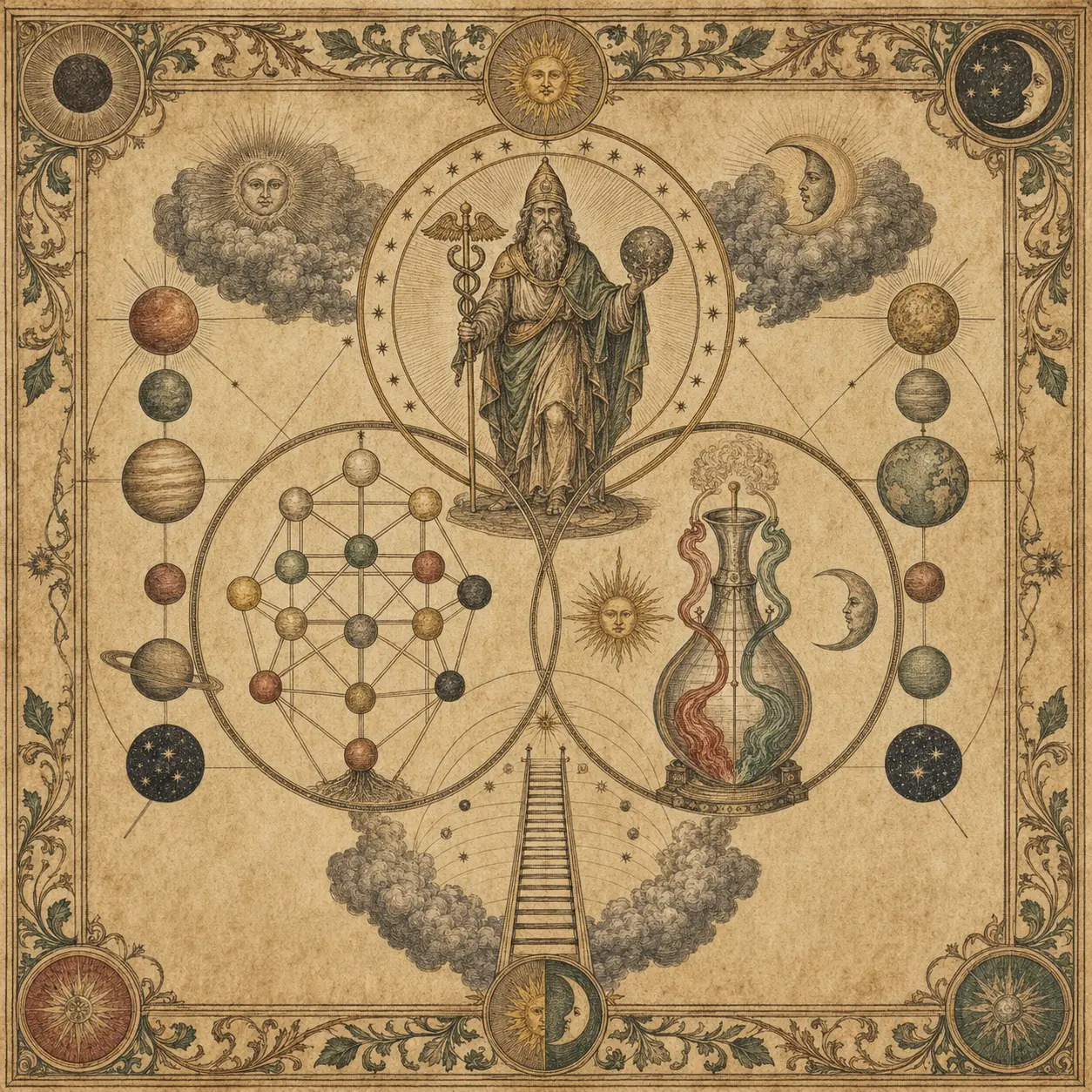
Hermes, Trinity, Tree

Four abstract figures arranged as instruments of interpretation, with their limits left visible.

Hermetic manuscript theory plate showing Hermes, a geometric trinity, Kabbalistic nodes and contemplative ascent
A newly made symbolic plate. It is an interpretive diagram, not an archaeological reconstruction.
ITransmission

Hermes

Hermes Trismegistus is treated here as a composite authority formed by texts, translations, attributions, and later reception. The figure joins writing, measure, mediation, and passage. Historical uncertainty is not an inconvenience to be concealed; it is part of the mechanism by which the name travelled.
IIDifferentiation

The Three

Trinity is used as a formal operator rather than a universal doctrine: two opposed terms and the relation that prevents them from becoming inert. Sulphur, Mercury, and Salt; source, medium, and residue; observation, instrument, and record. The third does not merely reconcile. It makes the opposition examinable.

IIIArrangement

The Tree

The Kabbalistic Tree is presented as a mnemonic architecture. Nodes separate functions; paths preserve relation. It does not cause atmospheric circulation, bodily change, or historical event. Its value lies in disciplined comparison: kingdom and material limit, foundation and recurrent image, beauty and distribution, crown and the limit of the model.

IVAttention

Exercise

Spiritual practice begins here with controlled recurrence: observe at the same hour, distinguish sensation from inference, record conditions, repeat, compare. An inward image may be retained, but it is dated and placed beside the measurement. Contemplation is not exemption from method; it is method applied to the instability of attention.

RULES OF USE

Correspondence

Compare operations across scales without claiming identical causes.

Trinity

Name the two terms, then identify the medium, record, or operation between them.

Tree

Use nodes to separate concepts and paths to test relations. Remove any path that explains nothing.

Practice

Date the observation. Locate the body. State uncertainty. Repeat under changed conditions.

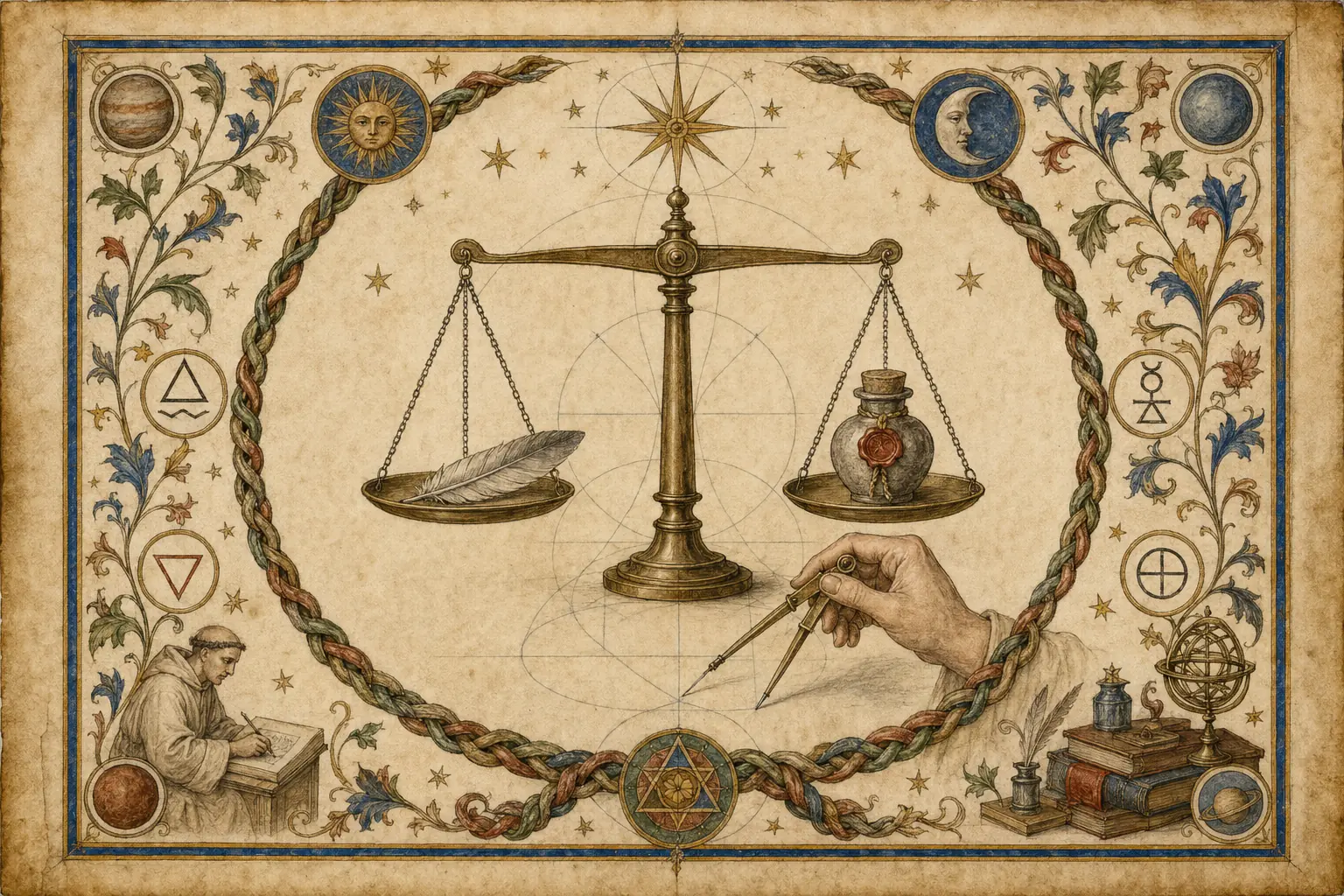
Illuminated manuscript scales with a feather, sealed vessel, compass and restrained Hermetic emblems
The feather is used here as an ethical counterweight, not a claim of lineage or authority.

THE FEATHER OF MAAT · ETHICAL CABINET

Power is not permission

The cited Golden Dawn anthology places magical practice under judgment by motive, discipline and consequence. This atlas translates that concern into four rules for symbolic work:

  1. Proportion. Do not make a larger claim than the evidence can bear.
  2. Restraint. The ability to construct a correspondence does not oblige its use.
  3. Accountability. Record the operator, purpose, method and possible harm.
  4. Revision. Withdraw an interpretation when observation contradicts it.

A symbol may organize attention. It may not overrule consent, clinical judgment, meteorological warning or another person’s autonomy.

Read the source anthology →